For Mom
Red rocks of Salto Angel. ras


posted by Rosemary @ 8:50 PM
1 comments

A short trip Venezuela, our first time to South America. We traveled from January 15 through February 4, 2006. Since returning home, we have posted many of our best photos (in chronological order). To see them all, click on the "Archives" button as well. Last post 2/16/06 ras.
 The river that drains Angel Falls. Known as a rio negro, or "black river" because it is dark with tanic acids, this river turns the color of burgundy as it flows over the regions bedrock. As you can see, the rocks in this area are red. The rocks are red, the dirt is red, the sand is red, the mud is red, cement is red. And so are you, when you swim in these rivers.
posted by Rosemary @ 8:49 PM
1 comments


posted by Rosemary @ 2:00 PM
1 comments
The un-nervingly small confines of our Cessna, that carried us from Ciudad Bolivar to Canaima and Angel Falls.

posted by Rosemary @ 9:05 PM
 Los monos ("monkeys," in Spanish), who lived in the mango tree at the posada we stayed at outside Ciudad Bolivar. We became friends, the monkeys and I. There were 2 monkeys, one who chose to live inside a fenced area, the other who went back and forth between this mango tree and the enclosure (which both monkeys could squeeze into or out of). One day I went down to meet them. I offered one monkey my hand, which he took thoughtfully in his, and sort of scratched on to see what it was all about. The other monkey came down, cautiously, to the bottom of his climbing perch. He then sidled over the grass to me, laid both paws on my shoe and looked up at me, then dashed back to his climbing post. I was so charmed I brought Michael over to meet them. They repeated the same actions, just as thoughtfully, with Michael, and again the morning we left. ras
posted by Rosemary @ 8:36 PM
0 comments
 This lovely colonial city has a paseo, or pedestrian walkway, along the banks of the mighty Orinoco, seen here at one of its narrowest points. In the background is the only bridge to span this 2140 km long river. The bridge is about a mile long.
posted by Rosemary @ 8:52 PM
 Meet Tookky, the toucan, who appears to live at Posada Casita, where we are staying just before we launch into the jungle of the Orinoco to see one of the greatest waterfalls in the world, Angel Falls. At 979 meters, it is the world´s tallest, and sits in the middle of one of the largest national parks in the world. We will be going via a small Cessna, then boat, then foot, to see the falls, and hopefully seeing monkeys and toucans along the way.
posted by Rosemary @ 10:16 AM
2 comments

posted by Rosemary @ 9:44 AM
1 comments
 This incredibly cool stick bug hitched a ride on Michael's hat one day while we were walking a trail outside of town. What a great disguise! We left Mr. Stick on a blade of grass, which also worked well with his attire.
posted by Rosemary @ 8:33 PM
0 comments
 One of many cheerily painted houses in Puerto Columbia.
posted by Rosemary @ 8:30 PM
0 comments
 A lovely orange sand beach where we spent a day playing in the surf and reading. At the end of a day, a man came along selling coconut drinks--wherein he cuts off the end of a green coconut, cuts a little notch for you to sip out of, and you drink the fresh coconut milk. Very refreshing. Only in the tropics.
posted by Rosemary @ 8:27 PM
0 comments

posted by Rosemary @ 1:55 PM
0 comments
Yes, Pepe is a pet, at a farm on a huge island in the Rio Apure, los Llanos. These otters are not called "the dog of the river" for nothing--Pepe was just like a happy, fat lab, complete with crotch-sniffing and muddy paws. But Pepe was so much more endearing because, well, he's an otter, not a dog, and it is pretty funny to watch him playing and romping around at our feet. He lives on the bank of the river, where he can swim if he wants (he could leave if he wants, but he has been a pet since he was a baby). He has his own pool that he prefers to the river. When we were finally ready to get back in our boat and head down river, we took the farmer's wife with us, with her basket of fresh eggs and bundles of fresh herbs to sell in the town. Pepe followed us to the river's edge, where he waded into the water, but did not swim after us, all the while making mournful barks and woofs at our leaving! Pepe was a big hit with me. ras

posted by Rosemary @ 8:52 PM
0 comments
 The red pirhana (there are over 30 varieties, not all of which deserve the ferocious reputation of this one). Our group fished for pirahana on the banks of the muddy river. I was content to just throw in a fish tail and watch it bob...jerk...nibble nibble...vanish under the surface of the water in seconds, torn to shreds by pirahana. ras
posted by Rosemary @ 8:23 PM
0 comments
The one that got away. Or rather, our guide Hermes didn't catch, much to our enjoyment. These are beautiful snakes.

posted by Rosemary @ 9:22 PM
0 comments
 Nevermind that our boat was actually broken down, and another small wooden fishing boat had gone off to get a wrench for us. We saw river dolphins and watched the shadows cast by the far-off Andes paint our sky.
posted by Rosemary @ 8:49 PM
 I don't know why this particular water hole in Los Llanos was so popular, but it was like a bird convention: the largest of all storks, the Jabiru (middle, with black head and red neck ring), plus roseatte spoonbills, scarlet ibis, the lovely woodstork (on the left, with black tipped wing raised). Oh yes, and hundreds of egrets and herons. Ho hum. Just another day in Los Llanos.
posted by Rosemary @ 8:44 PM
0 comments
 Corocora is what the locals call the scarlet ibis. I'm not sure, but I bet it means "day-glo pink bird" in Spanish. How would you feel if you were those other birds?
posted by Rosemary @ 8:39 PM
 Michael outside of the diminutive stone church built by hand, without cement, along the road high in the Andes.
posted by Rosemary @ 8:34 PM

posted by Rosemary @ 5:16 PM
2 comments
We are leaving Merida (and the land of super-cheap internet) tomorrow, for the swamps of Los Llanos (see earlier post of the map). This is supposed to be one of the most amazing swamps in the world, sister-swamp to one of my favorite places on the planet, the Everglades of Florida. It is also one of the reasons I really wanted to come to Venezuela, so we are prety excited. This will be with a tour, follow the link here if you want to see what we'll be seeing: http://www.arassari.com/3-safari.htm
posted by Rosemary @ 5:07 PM
1 comments
(parental note: this story has a happy ending)
posted by Rosemary @ 4:45 PM
0 comments

posted by Rosemary @ 4:32 PM
0 comments

posted by Rosemary @ 6:01 PM
0 comments
 Still a little jet lagged, and most certainly not used to the sun after Washington´s record-breaking rainy spell, we squint at our rooftop view--the Andes! Today, an orientation to the uber-busy city of Merida and it´s environs, tomorrow off to explore in the area. Unfortunately for us, the teleferico (the world´s longest and highest cable car in the world) closed for maintenance the day we got here! Ah, mal suerte! But that is the way it goes when you are travelling. ras
posted by Rosemary @ 4:31 PM
0 comments
 We flew from Caracas to Merida, the university town in the Andes. The big peaks (up to Pico Bolivar, at around 16,500 feet) were shrouded in clouds as we flew in, but the next morning the sky was clear. Merida sits on a giant mesa between two rivers (you can see one in the picture, the green strip on the lower right).
posted by Rosemary @ 4:14 PM
0 comments
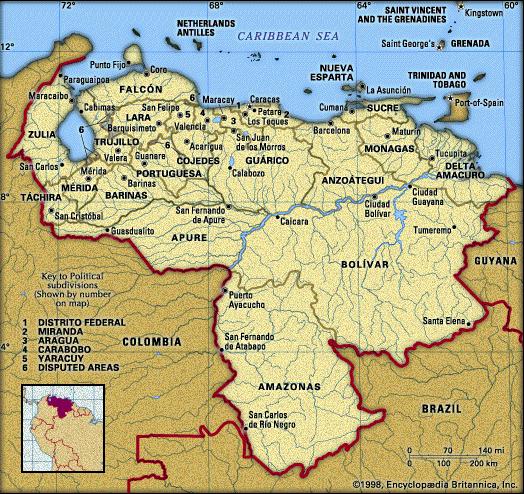
posted by Rosemary @ 9:08 PM
0 comments

posted by Rosemary @ 8:57 PM
2 comments
...is a trip for Venezuela.
posted by Rosemary @ 2:22 PM
0 comments

 ps over 3,000 feet from the top of a ¨tepui¨which is the name of the of the tabletop-shaped mountains scattered throughout the southeastern section of Venezuela. These odd mountains inspired Arthur Conan Doyle´s ¨Lost World¨and the fantasy of a part of the planet so remote that dinosaurs still roam there. Not hard to imagine how Doyle came up with this, as the tepuis and Angel Falls are in the middle of a vast wilderness that stretches across the Brazilian border and into the Amazon. The tepuis are often fog enshrouded and the area has endless rivers and valleys and thick rainforest. Each tepui is like an island in the sky and the flora and fauna that evolved on the tabletops did so in isolation from much of the world, so there are many unique, endemic species found only on these tepuis.In 1937, American pilot Jimmy Angel, looking for some of the rumored gold in ´thar hills, came upon the falls. He later returned, attempted to land, and crashed his plane on top of the tepui. He had a harrowing 11 day trip down. Thus his fitting last name now graces the non-native title for the fall.Gold was never discovered, thank god, and the region never developed in any way. It is now one of the largest national parks in the world. After our amazing flight to the village of Canaima, we immediately boated up the Rio Carrao for four hours through seemingly endless rainforest and further into the heart of the tepuis. Imagine a mix of the Grand Canyon, Zion, Monument Valley with waterfalls pouring off of every cliff into tropical rainforest. We got to our camp by mid-afternoon and walked an hour to the base of the falls.The pictures don´t do it justice, of course. It falls in lacy curtains of water rather than a thunderous crash, in a deep cleft carved out of the tepui by the water´s force. Truly stunning, made even more so by the fact that there were 20 or so other falls that we passed on the way almost equal in beauty and size. msk

